The Hiking Man Hikes West Virginia

The Urban Trail Hiker
Hiking in West Virginia immerses adventurers in the heart of the Appalachian Mountains, with rugged ridgelines, deep gorges, and lush hardwood forests defining the landscape. The state is home to iconic trails like those in New River Gorge National Park, where paths such as Endless Wall Trail and Long Point Trail offer dramatic views of one of the oldest rivers in the world. In Dolly Sods Wilderness, hikers can explore high-altitude plateaus with sweeping vistas and unique flora more common to Canada than the Mid-Atlantic. Seneca Rocks, Spruce Knob (the state's highest point), and the Appalachian Trail in the eastern panhandle offer challenging climbs and panoramic scenery. With its wild terrain and rich natural beauty, West Virginia delivers a truly adventurous hiking experience in “Almost Heaven.”

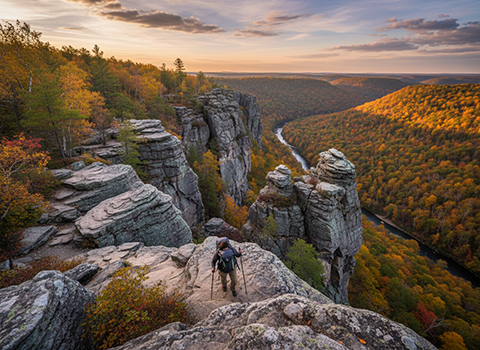
Seneca Rocks Trail (Monongahela National Forest)

Hiking the Seneca Rocks Trail is one of the most iconic and rewarding trail experiences in West Virginia. The well-maintained out-and-back trail climbs roughly 1.3 miles (2.6 miles round trip) to a dramatic overlook beneath the towering quartzite fins of Seneca Rocks. From the trailhead, the path steadily ascends through mixed hardwood forest, using stone steps and switchbacks to manage the elevation gain. While the climb is moderately strenuous, the clear route and solid footing make it accessible to most hikers with reasonable fitness.
Seneca Rocks Trail

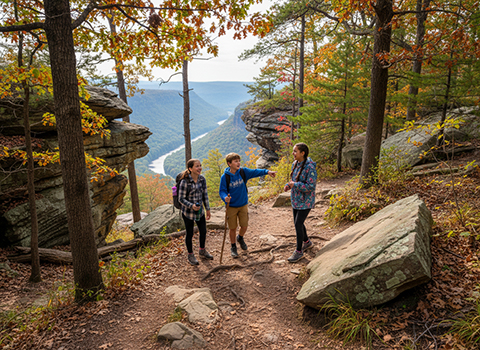
As you ascend, the forest gradually opens to glimpses of the North Fork River Valley below, building anticipation for the summit viewpoint. Near the top, the trail steepens slightly before reaching a large observation platform perched high above the valley floor. From this overlook, hikers are rewarded with sweeping views of rolling Appalachian ridges, patchwork farmland, and distant mountain ranges. The sheer rock spires rising above the platform add a dramatic sense of scale, and it’s common to see technical rock climbers scaling the vertical faces of Seneca Rocks far overhead.

What makes the Seneca Rocks Trail especially memorable is its combination of accessibility, scenery, and geological drama. The hike offers a true mountain feel without requiring an all-day commitment, making it popular with families, photographers, and first-time visitors to the Monongahela National Forest. Early mornings and weekdays tend to be quieter, while fall brings vibrant foliage that transforms the entire valley into a panorama of color. Whether you’re hiking for views, geology, or a classic Appalachian experience, the Seneca Rocks Trail delivers one of the most striking overlooks in the eastern United States.

Dolly Sods Wilderness – Bear Rocks

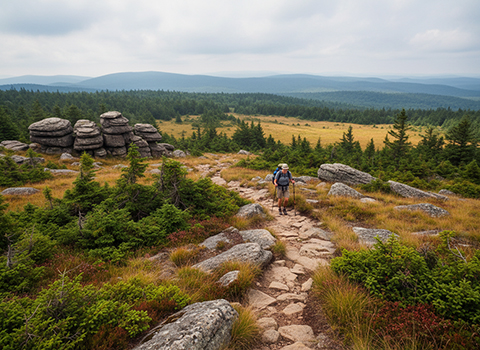
Hiking the Dolly Sods Wilderness – Bear Rocks feels like stepping into a landscape unlike anywhere else in the eastern United States. Located on a high-elevation plateau, Bear Rocks offers sweeping, open views, windswept terrain, and an almost alpine atmosphere more commonly associated with northern Canada. The area is easily accessed by a short walk from the trailhead, making it one of the most scenic low-effort hikes in the region. Exposed sandstone outcrops, twisted red spruce, and heath barrens create a rugged, otherworldly setting from the very first steps.
Bear Rocks trail

As you explore Bear Rocks, the scenery unfolds in broad panoramas rather than narrow viewpoints. Expansive vistas stretch across rolling highlands, distant ridges, and deep valleys, with dramatic rock formations framing the horizon. In late summer, the groundcover bursts into color as blueberries, huckleberries, and other heath plants ripen, while autumn brings vivid reds, oranges, and golds to the tundra-like vegetation. Weather here can change quickly—fog, wind, and sudden temperature shifts are common—adding to the sense of wildness and unpredictability that defines Dolly Sods.

The Bear Rocks area is ideal for hikers who value atmosphere and scenery over mileage. Its open terrain encourages wandering and exploration, but careful navigation is important, as weather and visibility can shift rapidly. Sunsets and sunrises are particularly spectacular, with glowing light washing over the rocks and expansive sky. Whether visited as a brief scenic walk or as part of a longer backpacking route through Dolly Sods Wilderness, hiking Bear Rocks delivers a rare, windswept, and unforgettable high-country experience in the heart of Appalachia.

Long Point Trail (New River Gorge National Park)

Hiking the Long Point Trail is a short but unforgettable trek that leads to one of the most iconic viewpoints in the park. The out-and-back trail is about 3.2 miles round trip and follows a relatively gentle path through mixed hardwood forest. While the hike is considered moderate, the terrain is generally well-defined, with gradual elevation changes that make it accessible to most hikers. From the start, the anticipation builds as the trail steadily guides you toward the edge of the gorge.
Long Point Trail

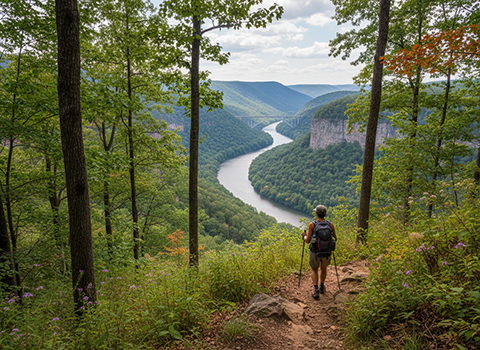
The highlight of the hike is the dramatic overlook at Long Point, where hikers are rewarded with a breathtaking, unobstructed view of the New River Gorge Bridge. From this vantage point, the massive steel arch appears suspended above the deep gorge, with the New River winding far below. The overlook sits atop sheer cliffs, offering expansive views of forested canyon walls and distant ridgelines. The contrast between the wild landscape and the engineering marvel of the bridge makes this viewpoint especially striking, and it’s a favorite spot for photography.

What makes the Long Point Trail particularly appealing is how much scenery it delivers for a relatively modest hike. The trail tends to be quieter than some of the park’s more heavily trafficked routes, especially on weekdays, allowing for a peaceful and immersive experience. Sunrise and sunset are especially rewarding times to visit, as shifting light and shadows transform the gorge and bridge into a constantly changing scene. For hikers seeking a classic New River Gorge experience with maximum visual payoff, the Long Point Trail is an exceptional choice.

Endless Wall Trail (New River Gorge National Park)

Hiking the Endless Wall Trail is one of the most scenic and rewarding experiences in the park. This roughly 2.4-mile point-to-point trail (often hiked as a loop with connector paths) follows the rim of the gorge, tracing dramatic cliffs high above the New River. The trail is well-maintained and moderately challenging, with rolling terrain, short climbs, and occasional rocky footing. From the very beginning, hikers are treated to expansive views that showcase the depth and scale of the gorge.
 Endless Wall Trail

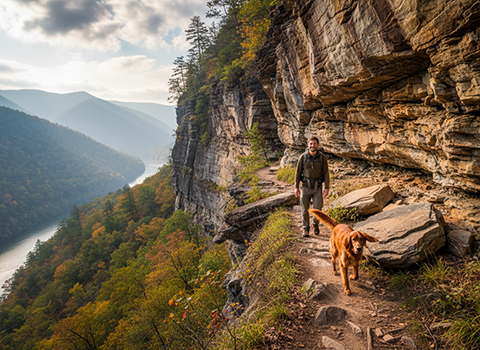
As the trail winds along the cliff edge, frequent overlooks open to sweeping vistas of the river far below and the forested canyon walls stretching into the distance. One of the most iconic viewpoints provides a striking angle of the New River Gorge Bridge framed by rugged sandstone cliffs. The name “Endless Wall” comes from the seemingly continuous rock face that parallels the trail, a feature that also makes this area a world-class destination for rock climbers. The mix of open overlooks and shaded forest sections keeps the hike visually engaging throughout.

What sets the Endless Wall Trail apart is its consistent payoff—there’s rarely a dull stretch, and the scenery unfolds steadily rather than saving everything for a single viewpoint. The trail is popular but long enough to disperse crowds, especially on weekdays or early mornings. Autumn is particularly spectacular, as fall foliage fills the gorge with layers of color, while spring brings blooming wildflowers and fresh greenery. For hikers looking to experience the dramatic heart of New River Gorge National Park, the Endless Wall Trail delivers nonstop views and a true sense of Appalachian grandeur.

Spruce Knob – Huckleberry Trail

Hiking the Spruce Knob – Huckleberry Trail offers a peaceful and immersive route to the highest point in West Virginia. The Huckleberry Trail is a moderately challenging out-and-back hike of roughly 2.5 miles round trip, winding through dense red spruce and hardwood forest. Unlike the short paved path from the main parking area, this trail provides a quieter, more natural approach to Spruce Knob, with a steady but manageable climb that feels rewarding rather than rushed. The shaded forest and soft footing make it a comfortable hike even during warmer months.
Spruce Knob Huckleberry Trail

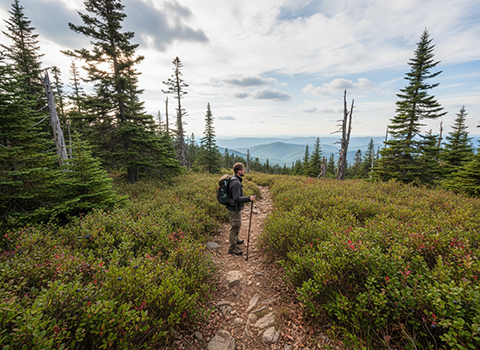
As the trail ascends, hikers pass through a cool, high-elevation ecosystem that feels distinctly different from lower Appalachian forests. Moss-covered ground, ferns, and spruce trees dominate the landscape, and the air often feels cooler and damper than surrounding areas. Occasional openings in the trees offer subtle glimpses of the surrounding highlands, but the hike is more about atmosphere than constant views. In late summer and early fall, huckleberries and other native plants add seasonal interest, while autumn brings vibrant foliage and crisp mountain air.

The reward comes near the summit, where the trail connects to the rocky outcrops and observation areas atop Spruce Knob. From here, sweeping views stretch across the Allegheny Mountains, with layered ridgelines fading into the distance. Wind-sculpted rocks and open sky give the summit a rugged, almost alpine feel, especially on clear days. The Huckleberry Trail is ideal for hikers who prefer solitude, forest immersion, and a sense of accomplishment over crowds and convenience, making it one of the most satisfying ways to experience West Virginia’s highest peak.

Blackwater Falls – Elakala Falls Trail (Blackwater Falls State Park)

Hiking the Blackwater Falls – Elakala Falls Trail offers a rich, immersive walk through one of West Virginia’s most scenic river gorges. This trail system connects Blackwater Falls with a series of smaller but equally beautiful waterfalls along Shays Run, forming a network of loop and spur trails rather than a single straight route. Wooden staircases, bridges, and forest paths guide hikers through steep terrain, making the hike moderately strenuous despite its relatively short distance. From the outset, the sound of rushing water and the deep gorge setting create a dramatic atmosphere.
Elakala Falls Trail

As you descend toward Elakala Falls, the trail winds through dense hemlock and hardwood forest, opening periodically to views of the Blackwater Canyon far below. Elakala Falls itself consists of several distinct cascades, each with its own character—some plunging dramatically over rock ledges, others spilling gently through mossy stone corridors. Footbridges and overlooks provide excellent vantage points for photography and quiet observation. The dark, tannin-stained water of the Blackwater River contrasts strikingly with the pale rock and green forest, adding to the area’s visual appeal.

What makes the Elakala Falls Trail especially memorable is the combination of varied scenery packed into a compact hike. In spring, snowmelt swells the waterfalls, while autumn brings brilliant color to the canyon walls. Even in summer, the shaded gorge stays cool and refreshing, and winter transforms the falls into icy sculptures for experienced cold-weather hikers. Popular but well-designed, the trail disperses visitors across multiple viewpoints and loops. For those seeking waterfalls, canyon views, and classic Appalachian scenery in one hike, the Blackwater Falls–Elakala Falls Trail delivers a rewarding and unforgettable experience.

Cranberry Wilderness – North South Trail

Hiking the Cranberry Wilderness – North South Trail is a deep backcountry experience that showcases one of the most remote and pristine areas in West Virginia. The North South Trail runs roughly 13 miles through the heart of the Cranberry Wilderness, connecting trailheads near the Cranberry River and the highlands farther north. This is a true wilderness route—narrow, minimally marked, and far removed from roads—best suited for experienced hikers or backpackers comfortable with navigation and self-sufficiency. From the start, the trail conveys a strong sense of isolation and immersion in untouched forest.
Cranberry Wilderness North South Trail

As the trail winds through the wilderness, hikers pass through dense red spruce, hardwood forest, and lush river valleys that feel more like the northern Appalachians or even parts of New England than central Appalachia. The terrain is rolling rather than steep, but frequent stream crossings, muddy sections, and root-filled tread add to the challenge. Moss-covered logs, ferns, and rhododendron thickets line the path, while the Cranberry River and its tributaries provide constant ambient sound and occasional scenic breaks. Wildlife sightings are possible, including deer, black bear, and a wide variety of bird species.

What makes the North South Trail especially memorable is its sense of continuity and solitude. There are no dramatic overlooks or developed viewpoints; instead, the reward comes from sustained immersion in a quiet, primeval landscape. Campsites along the route are primitive and scenic, often near water, making the trail well-suited for multi-day trips. Weather can be unpredictable, and conditions may change quickly, reinforcing the need for preparation and respect for the wilderness. For hikers seeking a long, uninterrupted journey through one of the wildest corners of the Monongahela National Forest, the Cranberry Wilderness North South Trail offers a rare and deeply rewarding backcountry experience.

Coopers Rock State Forest – Raven Rock Trail

Hiking the Coopers Rock State Forest – Raven Rock Trail is a rewarding trek that combines forest solitude with dramatic overlook views of the Cheat River Gorge. The Raven Rock Trail is a moderately challenging route that descends from the uplands of Coopers Rock into a quieter section of the forest, leading hikers toward one of the area’s less-visited viewpoints. The trail features a steady downhill grade on the way out, with a corresponding climb back, making it a solid workout without being overly technical. From the first steps, the forested surroundings set a calm, immersive tone.
Raven Rock Trail

As you follow the trail, the path winds through mixed hardwood forest with occasional rocky sections and root-covered tread. The terrain becomes more rugged as you approach Raven Rock, where sandstone outcrops and steep slopes hint at the dramatic gorge below. The Raven Rock overlook itself offers a striking, less-crowded alternative to the park’s main viewpoints, opening to expansive views of the Cheat River Valley framed by dense forest and layered ridgelines. The quieter setting makes it an excellent spot for photography, reflection, or a peaceful break before the return hike.

What makes the Raven Rock Trail especially appealing is its balance of effort and reward. While Coopers Rock State Forest is known for its popular overlooks and accessible paths, this trail provides a more secluded experience that feels closer to backcountry hiking. Seasonal changes enhance the hike, with spring wildflowers, summer shade, vibrant fall foliage, and occasional winter views when leaves are down. For hikers looking to explore beyond the busiest areas of Coopers Rock while still enjoying dramatic scenery, the Raven Rock Trail delivers a satisfying and scenic adventure.

Kaymoor Miners Trail (New River Gorge)

Hiking the Kaymoor Miners Trail is a challenging and memorable journey that blends rugged terrain with powerful industrial history. This steep out-and-back trail descends from the gorge rim to the ruins of the historic Kaymoor coal mine, losing roughly 800 feet of elevation in less than a mile. The descent begins with a long series of metal staircases, followed by rocky, uneven trail segments that demand careful footing. While short in distance, the trail is physically demanding, especially on the climb back up.
Kaymoor Miners Trail

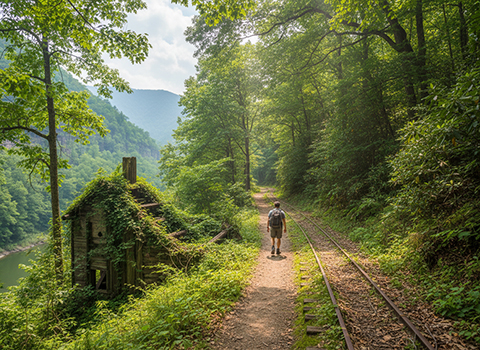
As you make your way downward, the forest gradually gives way to remnants of the Kaymoor mining operation, including stone foundations, rusting machinery, and scattered structural remains tucked into the hillside. Interpretive signs along the route explain the lives of the miners and the scale of coal production that once powered regional industry. The setting is quiet and shaded, with the sound of wind and distant river noise replacing what was once a bustling industrial site. Near the bottom, the sense of isolation and history is especially strong, making the ruins feel both haunting and fascinating.

What makes the Kaymoor Miners Trail stand out is its combination of physical challenge and storytelling. The strenuous climb back to the rim is rewarded with sweeping views of the New River Gorge from the overlook near the trailhead, offering a striking contrast between natural beauty and human endeavor. The trail is best tackled with sturdy footwear, plenty of water, and an unhurried pace. For hikers seeking a workout paired with one of the most evocative historical experiences in the New River Gorge, the Kaymoor Miners Trail delivers a uniquely intense and rewarding hike.

Otter Creek Wilderness – Moore Run Trail

Hiking the Otter Creek Wilderness – Moore Run Trail offers a quiet, immersive experience in one of West Virginia’s most secluded wilderness areas. The Moore Run Trail is a moderately challenging route that follows a shaded mountain stream through dense forest, making it an excellent choice for hikers seeking solitude rather than sweeping overlooks. The trail is narrow, minimally developed, and distinctly wild, reflecting the protected nature of the Otter Creek Wilderness. From the first steps, the absence of crowds and infrastructure creates a strong sense of backcountry exploration.
Moore Run Trail

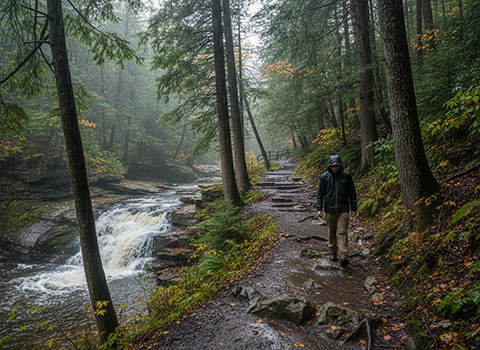
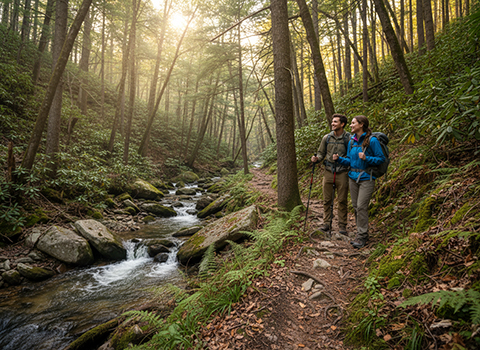
As the trail parallels Moore Run, hikers are accompanied by the constant sound of flowing water, with numerous small cascades, pools, and moss-covered rocks lining the stream corridor. The surrounding forest is lush and diverse, featuring hardwoods, hemlock, and thick understory vegetation that thrives in the cool, moist environment. Footing can be uneven, with roots, rocks, and occasional muddy sections, and several stream crossings may require careful navigation depending on water levels. Wildlife sightings are possible, and the quiet setting heightens awareness of birdsong and subtle forest movement..

What makes the Moore Run Trail especially appealing is its understated beauty and sense of remoteness. Rather than dramatic viewpoints, the reward comes from steady immersion in an intact forest ecosystem and the calming rhythm of the stream. The trail can be used as a standalone out-and-back hike or combined with other routes in the Otter Creek Wilderness for longer backcountry trips. Best enjoyed by hikers comfortable with navigation and changing conditions, the Moore Run Trail delivers a peaceful, authentic wilderness experience for those looking to slow down and connect deeply with the natural landscape.